Star Fox Adventures Is the Highest Form of Art
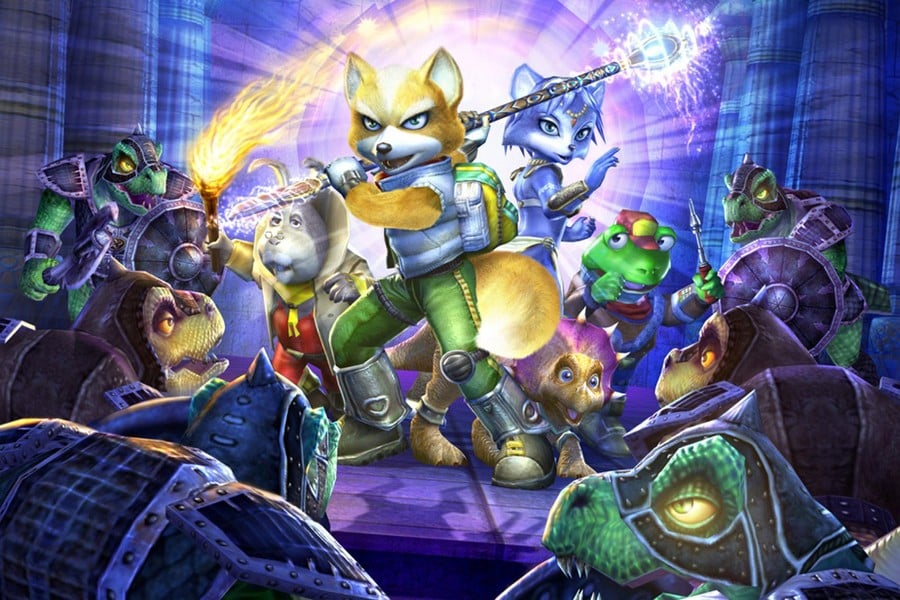
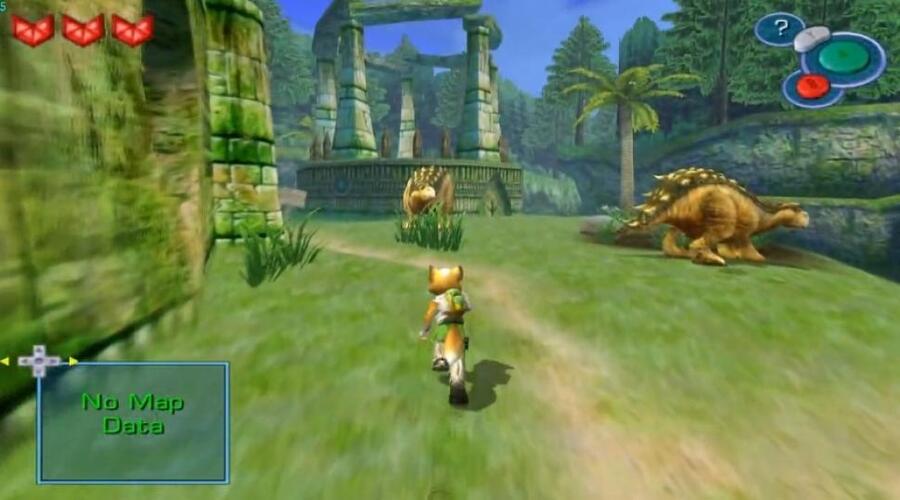
Although it'southward hard to believe now, when Star Fox Adventures launched in 2002 it gained largely positive reviews and shifted 200,000 copies in Japan, making it i of the organization'south early blast hits in its native region. However, history hasn't been kind to the game; over time, its reputation has crumbled and many defended Nintendo fans now view it as i of Rare's less essential titles. Of course, much of this negativity can be attributed to the fact that Star Fox Adventures was Rare'south final game equally a second-political party Nintendo developer - the twelvemonth before its release, Microsoft paid a full of $375 1000000 to acquire 100% of the Britain-based studio, ending its astonishingly fruitful clan with Nintendo.
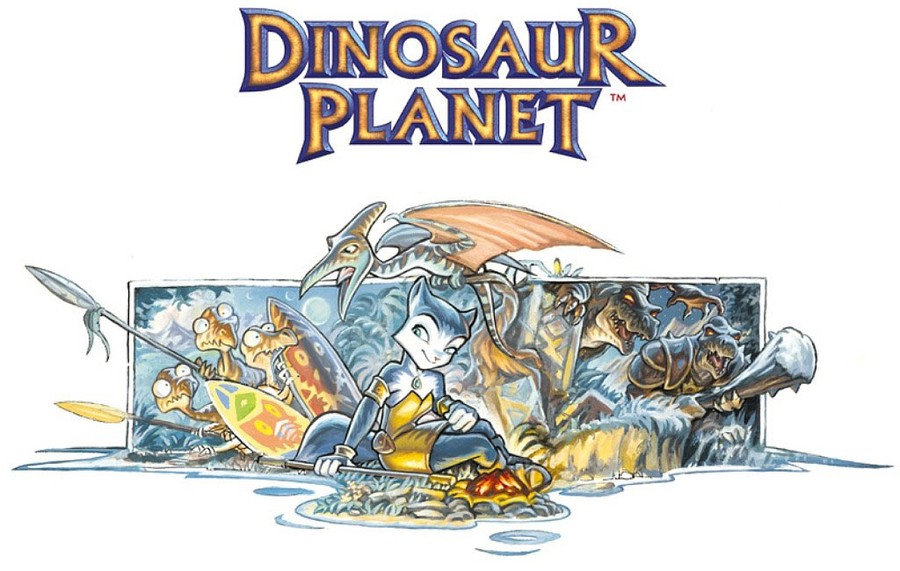
The game's dramatic fall from grace may likewise exist related to the fact that information technology famously had the Star Fox branding added mid-manner through evolution - prior to that, information technology was an N64 title by the proper noun of Dinosaur Planet. To uncover a little more regarding the fascinating history of Rare's one and only GameCube title, we spoke to the game's Lead Software Engineer, Phil Tossell.
"I began working at Rare straight after I graduated from University in 1997," explains Tossell. "I joined the Diddy Kong Racing programming squad near the tail end of the project. Around that fourth dimension GoldenEye 007 was just being finished off and one of my early memories was sitting side by side to Mark Edmonds - one of the GoldenEye programmers - in Rare's canteen and talking with him near the game and how excited I was about information technology."
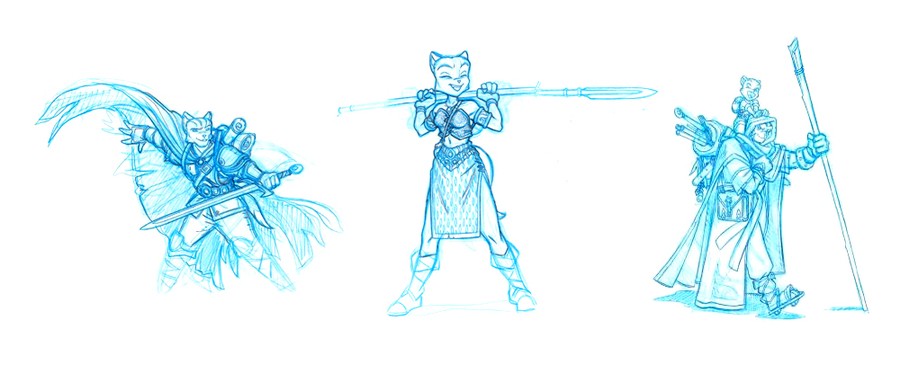
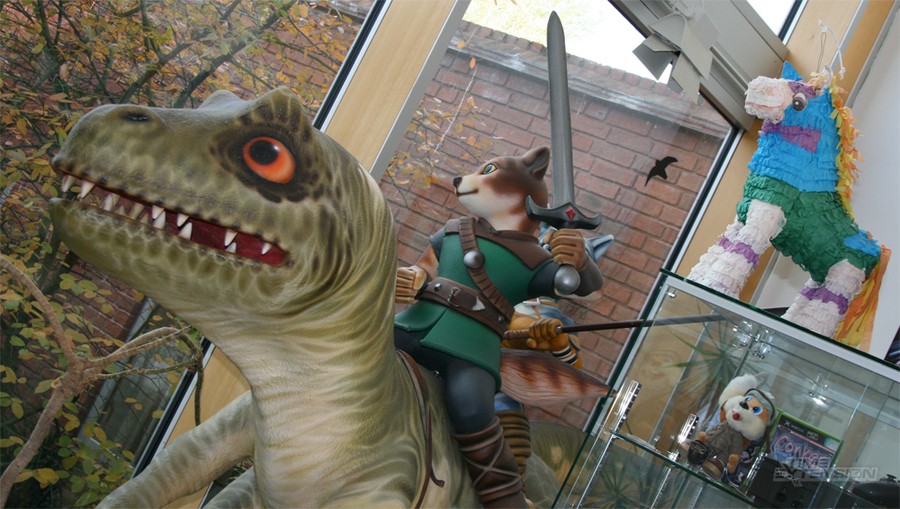
When work on Diddy Kong Racing was consummate, Tossell was pushed straight onto his adjacent project: the aforementioned Dinosaur Planet. "Piece of work began immediately after Diddy Kong Racing was finished," he recalls. "The programming team from Diddy Kong Racing split up into two, with some members - particularly Paul Mount who had been my mentor during my get-go six months - going to lead the Jet Strength Gemini programming squad. The rest of us began work on Dinosaur Planet. I don't actually know clearly where the inspiration for the game came from; Lee Schuneman was the designer and I retrieve him coming upwardly with so many ideas and sketches. The game inverse many times in early development before settling downward to the eventual idea of a continuous world adventure game based around two interweaved stories. For a long time, Dinosaur Planet had two primary protagonists - Sabre and Krystal - and y'all could actually bandy at whatsoever time between the two past speaking to Swapstone characters. These survived the transition to Star Flim-flam Adventures just their employ changed to beingness Warpstones. Originally Krystal also had a sidekick grapheme called Kyte - similar to Tricky in the concluding game, merely a pterodactyl that could wing. The story was as well quite different."
Co-ordinate to legend, Shigeru Miyamoto was shown footage of Dinosaur Planet and suggested that the game should be re-tooled to incorporate Fox McCloud and company. Rumours also abound that the change wasn't accepted willingly by all of the Dinosaur Planet squad, every bit the plot had to be rewritten in places to accommodate the Star Fox canon. Tossell's recollection of this period is hazy, largely because he wasn't directly involved with any of the high-level choices fabricated regarding the direction of the project. "I don't know for sure where the idea originally came from, but I definitely heard it mentioned that Miyamoto-san had suggested it," he says. "Of course we were slightly disappointed at having to change Dinosaur Planet as we had all go and so fastened to it, but we could also meet the potential of using the Star Fox licence." Information technology was effectually the same time that the option was fabricated to switch development from the ageing N64 to the new GameCube console.
"Nosotros were slightly disappointed at having to change Dinosaur Planet every bit we had all become so attached to it, but we could likewise see the potential of using the Star Fox licence"
With the Star Fox branding established, Tossell and the residue of the team worked tirelessly on the game with surprisingly lilliputian interference from Nintendo. "On the whole, we worked very independently," explains Tossell. "We had an initial trip to Nintendo's headquarters in Kyoto for about a week where we discussed the changes that would exist required to make the game fit in well with the Star Flim-flam universe. Sitting in a room discussing gameplay ideas with Miyamoto-san is certainly i of the highlights of my career and I still have his business organization card advisedly stored abroad. I besides remember going to an Italian restaurant for lunch nearly to the offices with Miyamoto-san and talking about all sorts of things. I'yard not 1 to get starstruck, but that'due south probably the one time in my life where I felt a little bit overawed. We also met with Takaya Imamura, who is the creative mind behind Star Play tricks originally. Imamura-san came to stay at Rare for effectually a month I call back, where he would work with Lee Schuneman overseeing what nosotros were doing. I think on the whole though, Nintendo was really trusting of our ability to make a great game."
Working under Nintendo was an eye-opening experience for Tossell, who is total of praise for the Japanese company. "Without dubiety of all the time I've worked in the manufacture information technology was the most trusting and respectful relationship," he says. "Of course, it helped because technically Rare was independent - Nintendo but owned 49% of the company, equally far as I am aware. This meant that the Stamper Brothers [Rare'southward founders] didn't have to do anything they didn't want to. This contrasts sharply with how it is now where Microsofts own the whole company. Even accounting for that though, Nintendo knows games - it knows them within and out and knows when something needs to be pushed and prodded and when it doesn't. And information technology understands that if you push and prod too much then you destroy any spark that a game may have. Information technology's a frail balancing human action that Nintendo made look easy."
When the game was somewhen released in 2002, comparisons to The Legend of Zelda: Ocarina of Time were rife. Tossell admits that the N64 classic was near definitely an influence on Star Pull a fast one on Adventures during the development period, but merely during the latter part. "When we first began Dinosaur Planet, Zelda wasn't out even so, so the game had a slightly unlike experience," he reveals. "But when Zelda came out, I retrieve the designers were really inspired and amazed by it, and to a large extent, nosotros emulated a number of features. The problem was we were making Star Play a trick on Adventures with a tiny team in comparison to Zelda; for most of the evolution, we only had 5 programmers, only adding more much afterwards on. I don't think anyone would even endeavor such a big game with such a small team nowadays."
"I recollect the game relied too heavily on collecting things...Information technology was a 'feature' of a lot of Rare's games at the time and I wasn't especially a fan"
Indeed, the small number of staff working on the project meant that information technology ran into a number of technical challenges. "Star Pull a fast one on Adventures was one of the showtime games to utilise a fully streaming world on a console that had a relatively small amount of memory," explains Tossell. "Squeezing everything in and making what I withal think is 1 of the most beautiful-looking GameCube games was a real challenge. When nosotros first conceived the idea of a 'no-loading' world it was on the N64 which of course had cartridges, making instant loading much more straightforward. However, by the time we moved to GameCube we were faced with our first experience of a disc-based medium, which added complications. In addition, with the move to Star Fox branding we had space levels which we had never envisaged in the beginning." Trick'south sidekick Catchy also caused headaches. "Keeping the misbehaving little dinosaur in check was a lot of work!" Tossell admits with a smile. "There was a lot of setup involved to ensure that Catchy always stayed with Fox and didn't get lost or trapped."
Of course, as is the example with many games, things had to be removed to get Star Fox Adventures to market. Given the game'due south constantly shifting focus, it's harder than you might expect to classify what did and didn't make the cut. "The game changed so many times during evolution that it was impossible to go on rail of what was added and removed," says Tossell. "I remember the only thing was that we wanted to make more of the Arwing sections. These were added in adequately tardily and because the game had non been designed with them in mind from the get-go, it stretched some our tools beyond what they were really designed for, limiting the scope and refinement of them." With the benefit of hindsight, Tossell is able to annotate on what he would and wouldn't include if he had the opportunity to commencement over once more. "I recollect the game relied as well heavily on collecting things," he says. "Information technology was a 'feature' of a lot of Rare's games at the fourth dimension and I wasn't particularly a fan. I would as well take done more with the aforementioned Arwing sections if nosotros'd had more than fourth dimension."
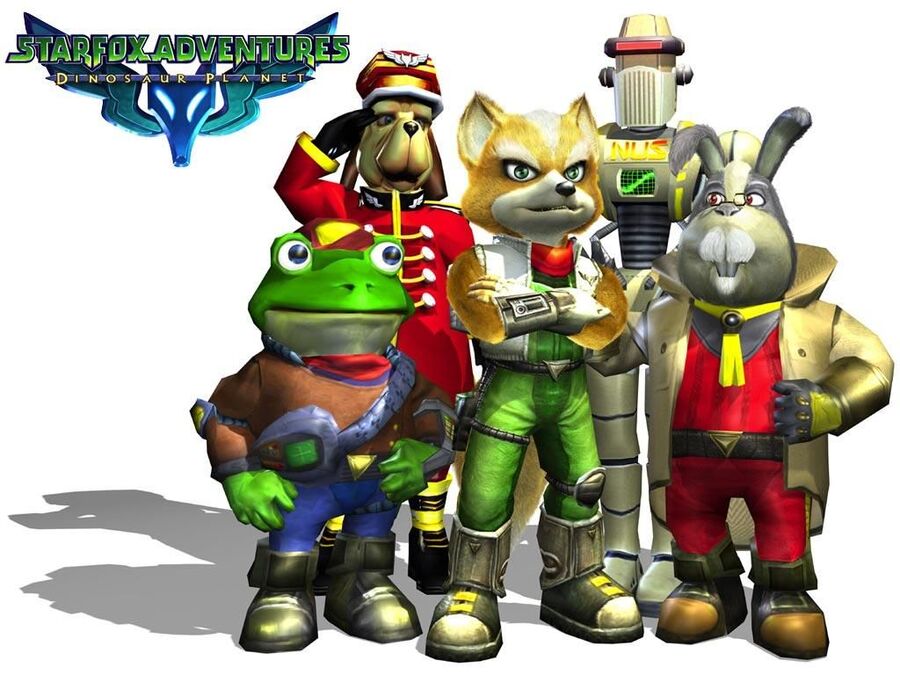
In many ways, the squad backside Star Fox Adventures pushed the hardware and broke new ground - a remarkable feat when you lot consider how wet behind the ears many of them were. "Every bit a programming squad we were pretty inexperienced," reveals Tossell. "Star Fox Adventures was the first full game that I had worked on and this was truthful for almost all of the programming team. Saying that though, I'thou proud of the guys I worked with on Star Fox Adventures. They all worked ridiculously hard - more was salubrious at times - but I have some of my fondest game evolution memories from the fourth dimension that I worked on the game." To make the process fifty-fifty more demanding, there was besides the modest matter of Microsoft buying Rare mid-fashion through the game's evolution. "The Stampers were very open up about the situation, at least every bit much as they could be," explains Tossell. "I recall for me it was a blessing to be working on Star Fox Adventures, considering we all the same had a clear deadline for completion of the game and knew we had to go it washed before any sale occurred; other parts of the company struggled for focus around that time because of all the dubiety. So from our perspective, it really just spurred u.s.a. on to get Star Fox Adventures finished."
"I've had plenty of people come up to me in subsequent years and say that they loved the game and didn't understand why information technology received and so much criticism"
When the game was completed, it garnered decent early reviews but didn't set the world alight in the way many had anticipated. "I totally understand the reaction, considering many of us on the team felt the aforementioned way," reveals Tossell when asked virtually the lukewarm disquisitional reception the game received. "Personally, I knew the game had its flaws, but also it borrowed a picayune too heavily from Zelda, I think. It also felt a little too much like the Star Fox elements were tacked on - which of course they were! But maxim all of that, I'grand incredibly proud of what we achieved, particularly given the amount of fourth dimension and resource nosotros had. I think some of the criticisms were unjustified and seemed to revolve around it not being a proper Star Fox game similar all the others, rather than judging it on what it was. I've had enough of people come upwards to me in subsequent years and say that they loved the game and didn't sympathise why it received so much criticism."
Tossell would proceed to presume the function of Manager of Gameplay and Human–computer Interaction at Rare and work on projects such as Kameo and Kinect Sports, simply left the company in 2010 to start up his own studio with two other ex-Rare employees. "I left on positive terms," he explains. "Overall it was just a mutual acceptance that the goals I had and the goals the company had no longer matched upward. And that is why it was all-time for me to go my own style. I left with the sole intent of setting up my own independent company called Nyamyam together with my fellow ex-Rare employees Jennifer Schneidereit and Ryo Agarie. Nyamyam was founded with the goal of creating a different kind of game. Our creative motto is: "create beautifully crafted games that both reflect who we are, and also bring a sense of wonder to the player". Our start title was Tengami, an take a chance game where you play a grapheme within a popular-up book; the whole game globe is congenital from pop-up elements. It's a very gentle, reflective game with a unique minimalistic art style inspired by traditional Japanese craftsmanship."
Tossell'southward future equally an independent developer is looking very vivid indeed, merely looking dorsum to the past for a moment, what does he think most the perception that his former employer has lost its manner in recent years?
There's a pause. "It'due south hard to answer this," he eventually replies. "In many ways, for me, Rare doesn't exist whatever more. That is the Rare that I knew and loved and that I got up every morning like an excited kid to become to work for. The Rare that I spent far likewise many hours at and withal never resented one bit. The Rare where all my friends were, nearly of whom are no longer there. And so that Rare doesn't exist any more. The Rare that does be is a new Rare, an evolved Rare with different goals and different aims, and I recall and promise that they will continue and go along to thrive in their own way. Kinect Sports was my final game at Rare and if you lot look past the kind of game it is, it all the same bears all the hallmarks of a quality, polished game that Rare was known for. I look frontwards to seeing what they exercise next."
Irrespective of the manner in which Star Fox Adventures is viewed by the gaming public of today, it'south abundantly clear that Tossell enjoyed every minute of its tumultuous and chaotic development. "I'd like to thank all of the Star Fox Adventures team," he states when asked if he has whatsoever final words to shut the interview. "Working with the guys and gals was an amazing experience and something I'll never forget. I'd especially like to thank the programming team: Nik, Nick, Cliff, Phil, Ray, Brendan, Graham and Andy. Thanks for corking times, your incredibly difficult work and your patience with my inexperience!"
lewistherefecance.blogspot.com
Source: https://www.nintendolife.com/news/2021/02/feature_the_making_of_star_fox_adventures_the_game_that_was_once_dinosaur_planet
0 Response to "Star Fox Adventures Is the Highest Form of Art"
Post a Comment